
The storied contest of England & Australian cricket has been shaped through iconic figures. Here, fans recount personal favourite stars from the men's Ashes series timeline.
The Pugnacious Bairstow
When asked about a preferred player, the choice is the combative Jonny Bairstow. His journey in the Ashes perfectly captures the triumphs and tribulations of an English player. It began with 2013, where he tempered his natural game to graft alongside Ian Bell. That winter, he stepped up to replace wicketkeeper Matt Prior, facing the formidable pace of Mitchell Johnson despite no red-ball preparation for three months.
He enjoyed an Ashes-winning comeback in the 2015 series and remains the only English player to have scored two Ashes hundreds on Australian soil after the year 2011, a feat accomplished despite ferocious media scrutiny. A difficult campaign came in 2019, though there was a vital contribution at the Leeds Test assisting the legendary Ben Stokes and Jack Leach. After returning in the 2023 series, a stunning unbeaten 99 in Old Trafford would have been robbed of a series-turning result due to inclement weather.
The Inimitable Syd Barnes
No bowler inspire such awe as the phenomenal Syd Barnes. His performance of 13 for 163 in 80 gruelling overs in the 1901-02 Ashes Test remains as testament to his skill. One can only wonder what more he could have accomplished had he been a less difficult character to handle. Boasting a staggering 6,229 wickets with a cost of 8.33, many consider the finest bowler. Reading about his records as a youth proved completely enthralling. What a a glorious bastard, truly incomparable. As MCC secretary Billy Griffith: “The extraordinary thing about him was that everyone who played with him thought him the best there was. There was never a single doubt about it.”
Richie Benaud
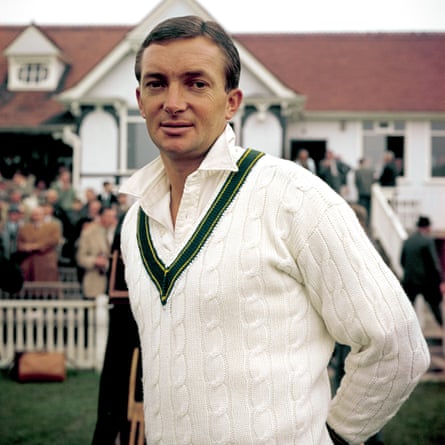
For many, the favourite player remains the legendary Richie Benaud. A move to secondary school in 1961 aligned with that year's Ashes, where the excitement was provided by the dashing Australian captain. Benaud didn't look from the rest; he possessed flair and audacity, a stark difference from the more traditional approach. He was articulate, commanding captain who came known for playing attacking, thrilling cricket.
Vivid recollections of that summer, where a permanent passion with cricket began, focus on the final day at the fourth Test. Watching intently the broadcast, the viewer watched England chase 256 to win. A good start saw the dashing Ted Dexter construct what many consider one of the great knocks. Yet he fell for 76, taken by wicketkeeper Wally Grout off the bowling of Benaud. Optimism persisted with captain Peter May coming at the crease. A delivery from Benaud and May steer it to leg. The next ball, Benaud bowled again outside leg, it turned sharply out of the footmarks and hit the stumps. The captain was dismissed for zero, the hush deafening. Benaud won the match with figures six for 70 , thus the visitors kept the Ashes. A moment of bittersweet emotion—desperate for an England win but in awe of an undeniable champion.
The Indefatigable Ian Botham
He is the greatest all-rounder. Relentless, inspirational, exceptional. Remember his heroics at Headingley in '81, Old Trafford 1981, the triumphant tour of Australia, not forgetting his iconic comment directed at the bowler Merv Hughes. An icon both for his charity work and his immense fortitude.
Harry Boyle
History often overlooks players such as Harry Boyle, yet he deserves to certainly be among the top 100 key cricketers of Ashes history. Boyle served as Fred Spofforth's bowling partner during the famous Oval Test of 1882, his role proved just as crucial as his partner's in securing victory. Indeed, it was Boyle who dismissed tailender Edmund Peate to win the match. While Fred Spofforth is celebrated as the father of pace bowling, his teammate proved modest and retiring, consistently prioritising the collective. This humility has led to his memory becoming somewhat forgotten, even though at his passing widely recognised as an important figure in the sport's development.
The Incomparable Don Bradman
The choice must be Don Bradman. While Shane Warne stands as a giant, the sheer weight of scoring he amassed against the old foe, combined with his shrewd captaincy, cements him not just as a great player but as the definitive answer. A batting average just shy of 90, two triple centuries, and a magnificent double following an ingenious move to flip the batting order to protect his main batters from a treacherous pitch in Melbourne in 1937.
Although not from his era, every enthusiast learns about his deeds from the 1930s and the 1948 tour. While most remember the final duck preventing a 100+ average, some treasure footage of him practising for hours using a water tank, or witnessing him endure the vicious Bodyline tactics and still emerge 56 runs per innings during a notoriously difficult Ashes for batters. He remains the ultimate Ashes batter in many eyes.
The Cerebral Mike Brearley
He elevated the craft of captaincy, so vital in cricket, to a new level. He epitomised his era showing that winning in the Ashes, especially in Australia, needed not just hard work and power. He motivated with considered, astute leadership, fostering a culture in which his team's abilities thrived. His reading of situations, the match state, and player psyches was masterful at the very moments a shift in momentum was required.
His was a nuanced, subtle method {that challenged|contradict


